Over 135 municipalities and regions took part in the innovation competition. The ten best entries were then awarded implementation funding.
During the project phase, various innovations will be tested in simulated scenarios to validate their suitability for real-world use. Test subjects will be involved to ensure that the perspectives of first responders are taken into account. In addition, the project will be supported by a group of experts who will advise the project partners and ensure that the applications can also be used beyond the project region.
Project region
The Ulm Innovation Region, comprising the cities of Ulm and Neu-Ulm and the districts of Alb-Donau-Kreis and Neu-Ulm, was selected as the project region. The Ulm Innovation Region was founded over 20 years ago by the participating local authorities together with the Ulm Chamber of Industry and Commerce and has been driving innovative developments across the borders of Baden-Württemberg and Bavaria for years.
Project objective
The objective of the research project, which is funded by the Federal Ministry of Digital and Transport, is to improve protection and save lives through the use of 5G-based technology in emergency services.
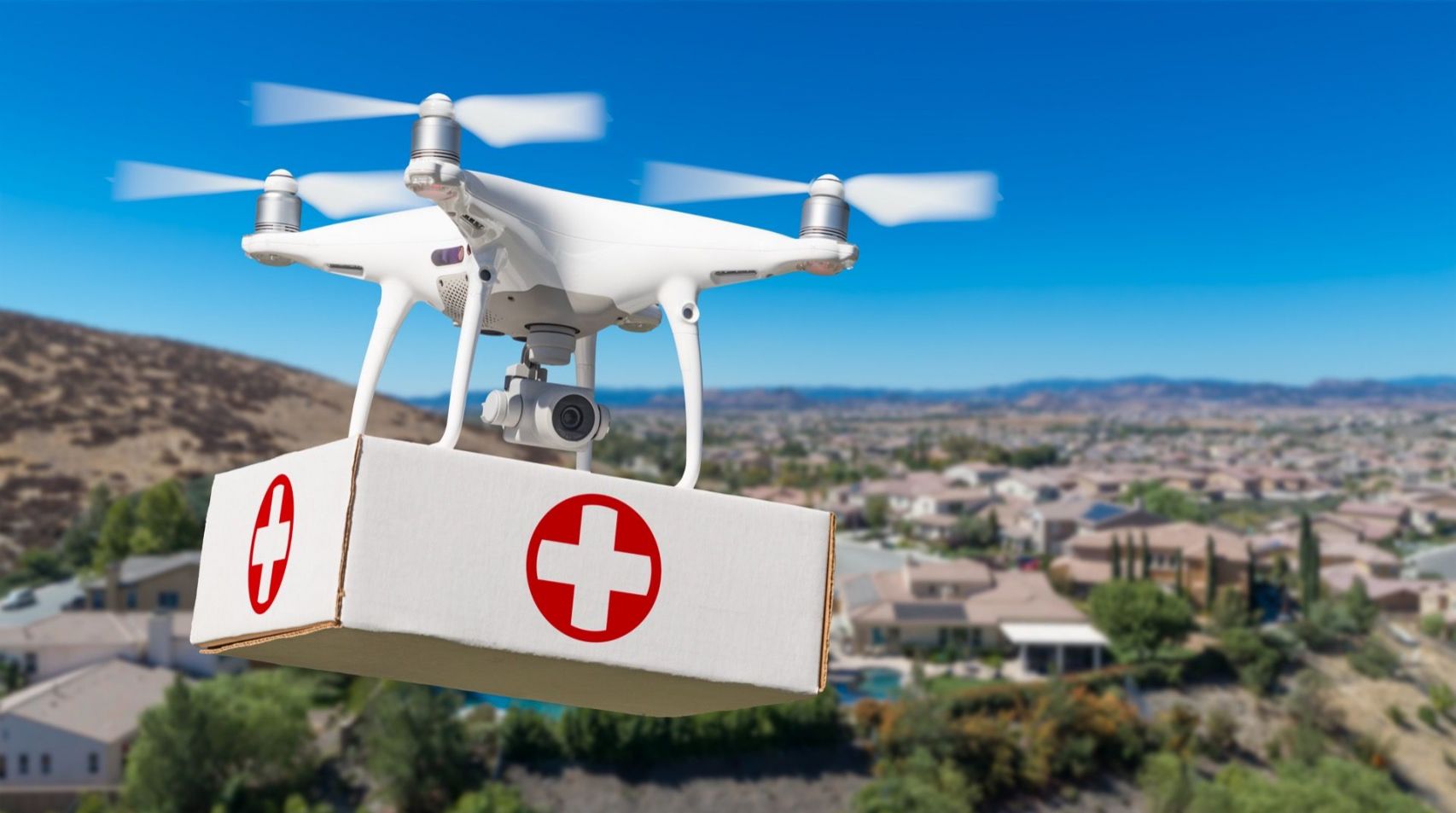
Specifically, the aim is to provide firefighters and rescue services with live data and information from the scene of the emergency in real time while they are on their way there. The aim is to enable emergency services to better assess complex situations, such as the release of hazardous substances, smoke gas propagation, or heavy rainfall. Citizens, in turn, will receive first aid instructions on their smartphones via 5G before the emergency services arrive.
Eurocommand work package
Part of Eurocommand's work package is the creation of a standard, evaluated in practical application, for optimized interoperability in the field of data collection under extreme conditions. Specifically, this involves supporting the iteration process from the perspective of a manufacturer of situation awareness systems.
In addition, it involves determining the framework conditions and monitoring them with the aim of evaluating the requirements for technical implementation from the perspective of our own customers and other users.
Another part is integration into the situation management system, where the goal is to integrate the sensor data into the control system and to visualize and evaluate the data in a geo-context and the functions of the control system. This requires available interfaces and interface descriptions of the sensor nodes for integration.

![[Translate to English:] Finn Drümmer (Projektmanager, Eurocommand GmbH), Carsten Weiske (Prokurist, Eurocommand GmbH), Heiko Blume (Landrat Landkreis Uelzen), Daniela Behrens (Innenministerin Niedersachen), Dieter Ruschenbusch (Regierungsbrandmeister LG2), Dr. Hilke Sophie Wichmann (Projektleiterin, MI Niedersachsen)](/fileadmin/user_upload/neugikeiten/Bild-ba7802a57a236d8g9c41e1f72006a844.jpg)